Proteostasis uk
UKProNet: Core Management
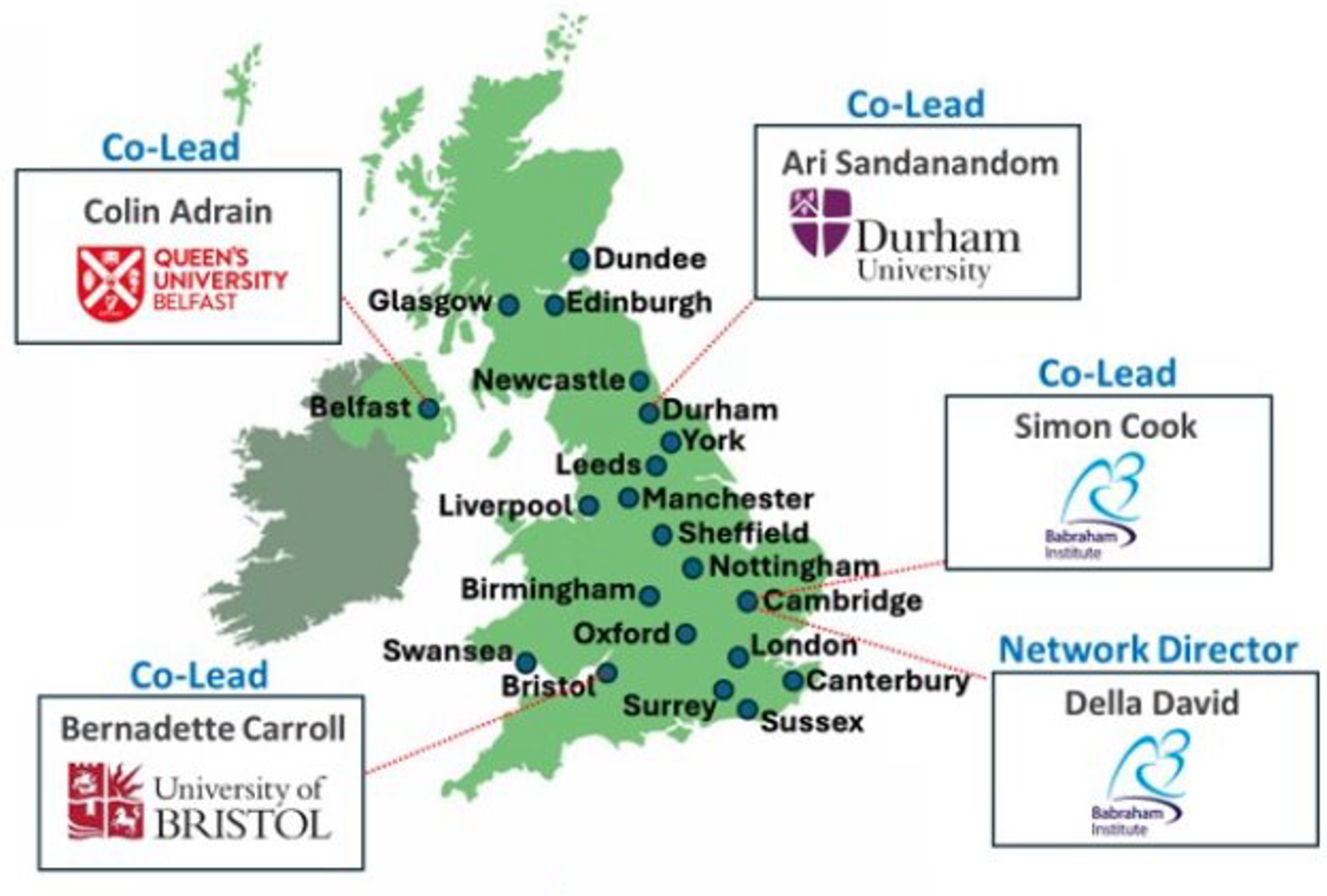

Della David
Signalling ISP, Babraham Institute
UKProNet Director
Our research group studies the intracellular and extracellular proteostasis mechanisms that protect against protein aggregation during ageing. We use mainly the nematode Caenorhabditis elegans as our ageing model of choice for genetic, proteomic and imaging based experimental approaches. Ultimately, our aim is to discover ways to promote healthy ageing and alleviate age-related diseases.
Keywords: Model organisms (C. elegans); Ageing; Aggregation
Colin Adrain
Patrick G Johnston Centre for Cancer Research; Queen's University Belfast
UKProNet Co-lead
My lab is interested in understanding how membrane protein biogenesis, quality control and proteolysis of membrane proteins regulate cell signalling during health and disease. We have a particular interest in the interplay between metabolism, inflammation and growth control in mammals. My lab uses a combination of cellular biochemistry and organismal (mouse) physiology in our studies.
Keywords: Protein transport; Model organisms (C. elegans, Drosophila, etc); Protein degradation
Bernadette Carroll
School of Biochemistry, University of Bristol
UKProNet Co-lead
We are interested in how stress and mitogenic cues are sensed and integrated by the evolutionarily conserved protein kinase, mechanistic Target Of Rapamycin Complex 1 (mTORC1) to dictate downstream anabolic vs catabolic responses, particularly autophagy. Central to our work is understanding how the lysosome supports the mTORC1-autophagy axis, and how its dysregulation contributes to cellular senescence, a key driver of ageing. We use in vitro molecular cell biology and biochemistry techniques, and are developing in vivo zebrafish models.
Keywords: Mammalian models / cell culture; Lysosome; Ageing
Simon Cook
Signalling Programme, The Babraham Institute
UKProNet Co-lead
My lab is interested in signal transduction pathways and especially links between protein phosphorylation and protein degradation in the context cellular responses to stress. Current projects are focused around RAF-MEK-ERK1/2 signalling, the Integrated Stress Response and the DYRK family of protein kinases.
Keywords: Post-translational modifications (PTMs);Condensates; Protein degradation

Ari Sadanandom
Department of Biosciences, University of Durham
UKProNet Co-lead
My laboratory’s main focus is to understand the role of protein modification systems in particular Ubiquitination and SUMOylation in regulating plant responses to the environment. My laboratory has demonstrated that SUMOylation coordinates growth control with changing environmental conditions by directly modifying the activity of major transcriptional regulators in plants.
Keywords: Condensates; Plants; Post-translational modifications (PTMs)