ECR Online Seminar Series
Proteostasis UK ECR Seminar Series: Next Online Meet-Up on 27 October 2026!
Our Proteostasis UK ECR seminar series is a monthly event where members of the network can share their research with a wider audience. This is open to any member of the network and features two speakers in an hour-long session, these will generally include a balance of new researchers such as PhD students, and more established researchers working in the field proteostasis.
This months speakers are
- Natalia Jimenez Moreno from Simon Wilkinson's lab (University of Edinburgh) who will present:
"Beyond ER-phagy: a condensate-nucleated degradative hub sequestering FAM134B and RhoA to govern cell morphology"
- Charlene Dambire (University of Nottingham) who will present:
"Activated by cleavage: Protease-driven protein regulation in plant responses to environmental cues
Click here for the link to join Natalia's and Charlene's talk on 27 October at 3:00 pm.
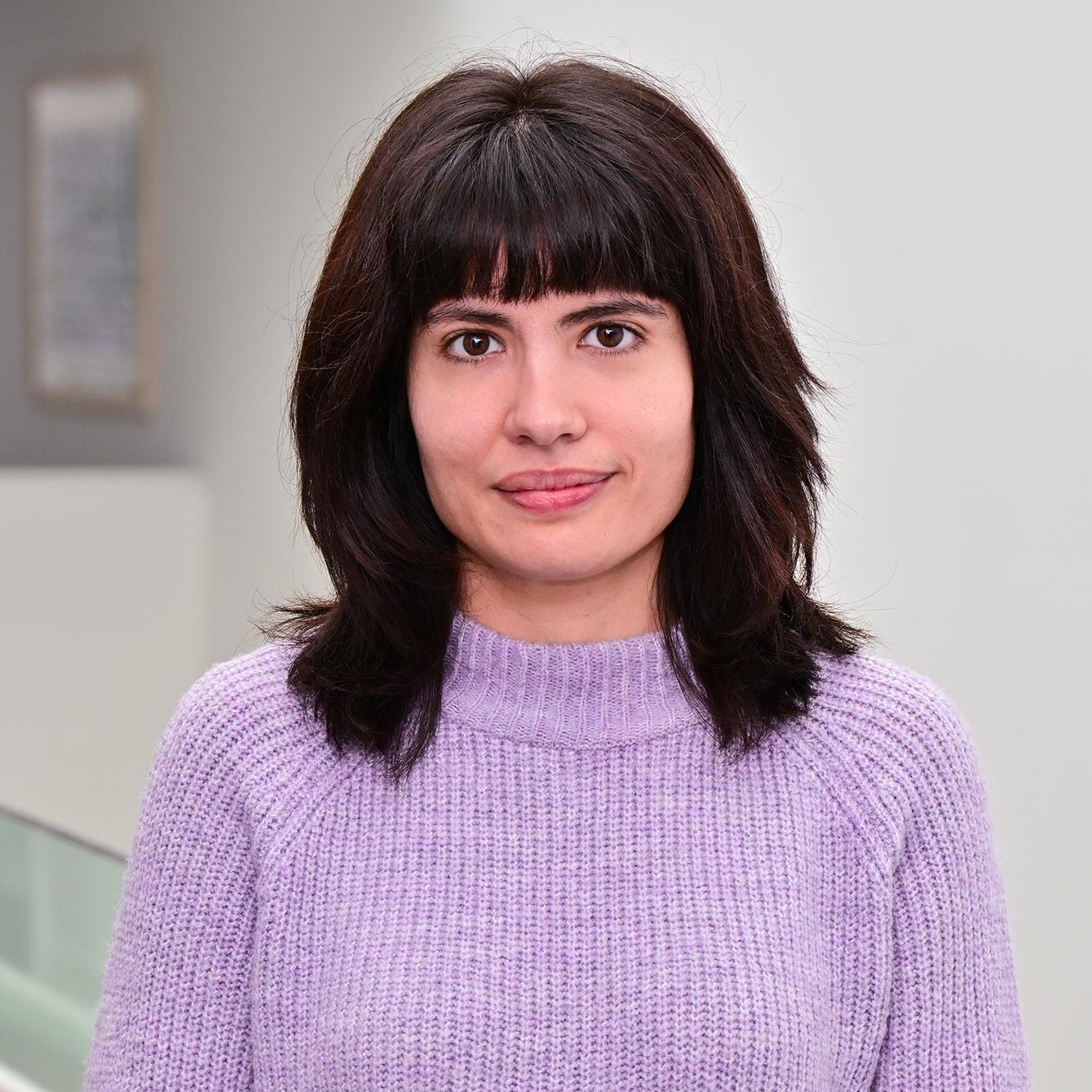
A Bit About Natalia:
I am a cell biologist specializing in autophagy—the cellular "self-eating" degradation process responsible for clearing damaged components to maintain health and homeostasis. I earned my B.Sc. in Biochemistry (2014) and M.Sc. in Molecular Biology (2015) from the Autonomous University of Madrid, followed by a Ph.D. in Dynamic Cell Biology (2020) at the University of Bristol through the Wellcome Trust program under Prof. Jon Lane’s supervision. Currently, I work as a Postdoctoral Researcher at the University of Edinburgh's Institute of Genetics and Cancer within Prof. Simon Wilkinson’s lab. My research investigates the molecular mechanisms of ER-phagy (the selective autophagy of the endoplasmic reticulum), uncovering new pathway components and exploring their physiological roles in protein homeostasis and oncogenesis. Outside of my core research, my primary focus right now is writing fellowship grants to secure my independence—which takes up most of my time! Whenever I do have free time, I love spending it with my 7-year-old daughter, Selena.
Talk Title:
"Beyond ER-phagy: a condensate-nucleated degradative hub sequestering FAM134B and RhoA to govern cell morphology"
Abstract for her Talk:
The endoplasmic reticulum (ER) is a dynamic organelle that undergoes continuous remodelling via a selective form of autophagy known as ER-phagy. ER-phagy receptors such as FAM134B/C are canonically defined as cargo adaptors that cluster with the autophagosomal protein LC3B to drive ER remodelling; however, their broader physiological functions and regulatory mechanisms remain elusive. Using proximity proteomics in pancreatic cancer cells, we identify PRKAR1A — a regulatory subunit of PKA — as a direct, cAMP-responsive binding partner of FAM134B/C, acting independently of PKA catalytic subunit inhibition. FAM134B engages PRKAR1A dimers via an amphipathic helix within its disordered C-terminus, docking into a hydrophobic pocket in the PRKAR1A dimerization domain.
Using SoRA super-resolution imaging, FRAP, and CLEM, we show that cAMP-bound PRKAR1A forms liquid-like condensates that establish direct contacts with the ER membrane. At these contacts, PRKAR1A actively clusters ER-embedded FAM134B/C with LC3B and recruits lysosomes locally, scaffolding a spatially discrete degradative hub for turnover of the receptor.
Critically, beyond ER cargo, this hub also sequesters the cytoskeletal GTPase RhoA, driving its co-degradation alongside FAM134B/C. Underscoring the physiological relevance of this, these cytoplasmic-facing actions of FAM134B/C control actomyosin contractility and ultimately dictates cell morphology and cancer cell invasion modality.
In summary, we describe a novel inter-organellar contact between liquid condensates and the ER that serves as a cellular degradation hub. These hubs coordinate ER remodelling with cytoskeletal dynamics, broadening the role of ER-phagy receptors beyond homeostatic maintenance to the active regulation of cellular morphology and cancer metastasis.

A Bit About Charlene :
Dr Charlene Kunaka-Dambire is a BBSRC Discovery Research Fellow in the School of Biosciences at the University of Nottingham, where she leads research investigating how plants sense and respond to environmental stress. Her research focuses on protease biology, protein stability and the N-degron pathways, with particular interest in how targeted protein degradation regulates plant adaptation to changing environments.
Charlene has contributed to significant advances in understanding the roles of substrates of the oxygen-sensing PCO N-degron pathway, a molecular system that enables plants to respond to changes in oxygen availability. Her research has contributed to publications in leading journals, including Nature Communications (2018;2023;2026) and Nature (2022).
As a BBSRC Discovery Research Fellow, Charlene is developing an independent research programme investigating the role of protease-triggered protein function in the model plant species Arabidopsis thaliana, with the broader aim of uncovering mechanisms that enhance our understanding of plant stress resilience and their potential relevance to sustainable agriculture and food security.
Originally from Zimbabwe, Charlene is also passionate about mentorship in STEM for women and girls. She received the 2025 UK Black in Plant Science Research Excellence Award in recognition of her scientific contributions and advocacy and supporting the empowerment of girls to pursue opportunities and careers in STEM.
Talk Title:
"Activated by cleavage: Protease-driven protein regulation in plant responses to environmental cues"
Abstract for her Talk:
Intracellular proteolysis is traditionally viewed as a destructive process that eliminates proteins through proteasomal degradation. Our work challenges this paradigm by asking: why are proteins cleaved at specific sites if their fate is ‘just’ degradation? We demonstrate that selective proteolytic cleavage of proteins can generate functionally distinct protein fragments (proteoforms) whose stability and activity are conditionally regulated by the N-degron pathways, thereby rewiring plant responses to environmental cues.
The N-degron pathways target proteins for proteasomal destruction based on their exposed N-terminal amino acid following cleavage of proteins by proteases, providing a mechanism to determine the fate of proteoforms.
We showed in model plant species, Arabidopsis thaliana that the protease METHIONINE AMINOPEPTIDASE removes the initiating methionine from ERFVII transcription factors, exposing an N-terminal cysteine that is oxidised by PLANT CYSTEINE OXIDASES (PCOs), resulting in arginylation by ARGINYL TRANSFERASES (ATEs), and recognition by the E3 ligase PRT6, leading to proteasomal degradation. Our work revealed that under hypoxia, inhibition of PCO activity stabilises ERFVIIs, enabling activation of hypoxia-responsive genes and promoting adaptation to low oxygen and high-altitude environments.
Extending this principle, we identified the protease METACASPASE9 (MC9) as a regulator of multiple substrates whose cleavage products are controlled by the ATE N-degron pathway. MC9 cleavage of the transcription factor HY5 generates E59-HY5, a proteoform that escapes COP1/SPA-mediated degradation and acts as a fail-safe developmental regulator during photomorphogenesis, while also controlling the unfolded protein response. We also show that MC9 similarly cleaves the proteasome-associated deubiquitylase UBIQUITIN PROTEASE6 (UBP6), producing the E157-UBP6 proteoform, whose stability and function is likewise regulated by the ATE N-degron pathway following pathogen perception.
Together, our findings reveal how plants couple proteolysis with N-degron pathways mediated conditional stability to dynamically coordinate their responses to environmental cues, demonstrating that proteolytic cleavage can generate new regulatory states rather than simply marking proteins for destruction.
Seminar Schedule
(Seminars are held on the last Tuesday of each month at 3pm BST.)
November 24th 2026:
- Jane Dudley (The Francis Crick Institute) "RING E3 ligase TRIM8 is structurally selective for UBE2N-mediated ubiquitination"
- Nagore Elu (University of Edinburgh)
.......Talks will resume in the New Year, 2027.
If you are interested in signing up as a speaker, please fill in the short form here and we'll get back to you shortly.
To Take part in the ECR Online Seminar Series Speakers must:
* Be a member of Proteostasis UK. If you are not already, sign up here.
* Be based at a UK institution or organisation
* Self-identify as an early career researcher (ECR)
See our previous speakers here: https://proteostasisuk.co.uk/ecr-network/ecr-seminar-past-speakers
Missed a seminar? Visit our YouTube page to catch up on previous seminars.
Seminar series FAQ:
When will the seminars be?
We hold the ECR seminars every month on the last Tuesday of every month via Teams
How long will the talks be?
Each meeting will have two 20-minute talks with a five-minute question session after.
What do you mean by an ECR?
These seminars are intended for early career researchers (ECRs) ranging from PhD students to early-stage group leaders (within the first five years).
How do I access the meetings?
Registration will be available a month before each meeting. Reminders for each session will be sent out a week before the meeting with a reminder the day before the meeting.
I don’t have much data, can I still present?
If you have something you want to talk about and few datapoints to back it up, then please sign up. This is an accessible series for early career researchers to talk about their research and receive input from other’s working in the field so feedback on incomplete or non-publication ready research can be a useful tool. If you are unsure, please talk to a supervisor or colleague, or contact us at proteostasisuk@babraham.ac.uk.
Will the meetings be recorded?
We would like to record the meetings and share them on the website. However, we understand that not everyone may be comfortable being recorded, and that’s absolutely fine. If you would prefer for your talk not to be recorded or shared, please let us know in advance and we will make sure this is respected.