Meet our ECR Representatives
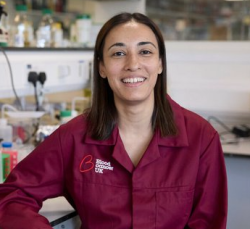
Jasmeen Oberoi
Genome Damage and Stability Centre, University of Sussex
Early Career stage group leader
We use structural biology, biochemical, and cellular approaches to understand the structural assemblies of HSP90 molecular chaperone complexes, their regulation of oncogenic kinases, and the consequences of disrupting their function on cancer signalling pathways. As a new PI, I am motivated to improve support and visibility for researchers across all early career stages. As an ECR representative for Proteostasis UK, I look forward to helping build an active and engaged community, supported through skills training, networking, and career development opportunities.
Keywords: Protein folding and chaperones; Cancer; Post-translational modifications (PTMs)
Website: https://profiles.sussex.ac.uk/p372952-jasmeen-oberoi/about
Follow me on LinkedIn: www.linkedin.com/in/jasmeen-oberoi-b315468
Follow me on Bluesky: @jasmeenoberoi.bsky.social
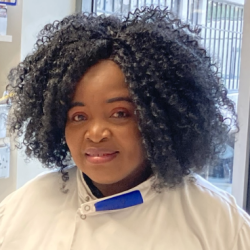
Yvonne Nyathi
School of Biomedical Sciences, Faculty of Biological Sciences, University of Leeds
Early Career stage group leader
Our laboratory investigates molecular mechanisms of membrane protein proteostasis, from their synthesis to integration into target membranes. Employing a multidisciplinary approach, we harness proteomics, high-resolution imaging, bioinformatics, biochemistry, and structural biology to deepen our understanding of these vital processes and their impact on cellular function and disease.
Keywords: Protein degradation; Protein folding and chaperones; Protein transport
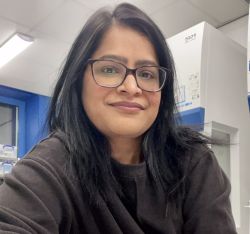
Shalini Agarwal
MRC PPU, University of Dundee
Postdoctoral Researcher in the lab of Dario Alessi
I am a postdoctoral researcher at the MRC Protein Phosphorylation and Ubiquitylation Unit (University of Dundee), and am currently deploying proximity proteomics to study the role of LRRK2 in lysosomal signalling. I have a broader interest in studying how cells respond to stress to maintain mitochondrial quality control in neurodegenerative diseases, such as Parkinson's disease and motor neuron disease. As an ECR representative for Proteostasis UK, I am keen to actively contribute, connect with other early career researchers, and support the Network’s mission. I am especially motivated to give back to a community that has already had a meaningful impact on my development.
Keywords: LRRK2, lysosome, proximity proteomics, PINK1, mitochondria, mitophagy, quality control

Alina Üffing
Molecular Cell Biology of Autophagy Laboratory, The Francis Crick Institute
Postdoctoral Researcher in the lab of Sharon Tooze
I am interested in different protein-protein interactions involved in autophagy and study these by combining cell biology and in vitro approaches. I think one of the best parts of being a researcher is engaging with other scientists – this motivated me to become an ECR representative.
Keywords: Autophagy, Molecular Cell Biology
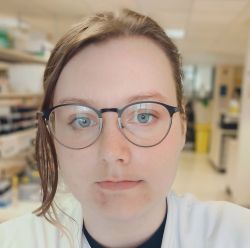
Jess Chambers
School of Biomedical Sciences, University of Leeds
PhD Student in the lab of Yvonne Nyathi
As the ECR panel’s PhD representative, I am very excited to be able to promote ECR development and work to build the UK proteostasis community. I started my PhD at the University of Leeds in 2024, looking at the quality control mechanisms underpinning membrane protein proteostasis. As part of this project, I use a variety of different methods ranging from bioinformatics to confocal microscopy to proteomic analysis using LC-MS/MS to investigate post-translational membrane protein targeting and degradation.
Keywords: Membrane Protein Triage, Molecular mechanisms, Protein Biochemistry, Protein Folding, ERAD, Translocation
Follow me on LinkedIn: Jessica Chambers
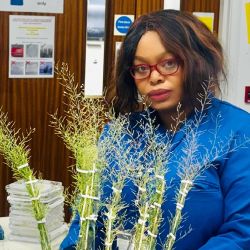
Charlene Dambire
University of Nottingham
BBSRC Independent Fellow
I am a Research Fellow at the University of Nottingham, investigating the role protease targets in plant stress responses. My research on the oxygen-sensing PCO N-degron pathway has contributed to multiple publications, including work in Nature Communications (2018), Nature (2022) and Nature Communications (2023). I was awarded the (2025) UK Black in Plant Sciences Research Excellence Award, recognising both my scientific contributions and advocacy for diversity in STEM through Ideas2Careers, a mentorship platform for empowering girls.
Being an early-career researcher who progressed via a non-linear route, from senior technician to postdoctoral research fellow, I represent diverse ECR perspectives. As the 2025 recipient of the UK Black in Plant Sciences Research Excellence Award, being an ECR representative for Proteostasis UK, positions me to inspire and mentor the next generation of Black female scientists . As a woman of Black heritage, I offer a distinct perspective to the committee. My lived experiences have given me valuable insight into the underrepresentation of Black women in plant proteostasis research, and I am proud to contribute to efforts that promote talented staff from the widest range of backgrounds.
Keywords: proteostasis, n-degron, stress sensing, metacaspases
Follow me on LinkedIn:Charlene Kunaka-Dambire
Follow me on Bluesky:@charlene-kunaka.bsky.social